
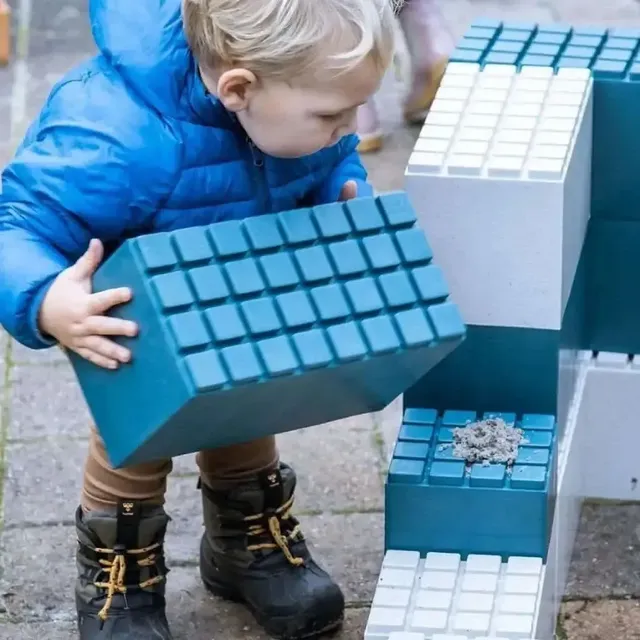
Giant Building Blocks are a fantastic way to combine movement, imagination, and hands-on learning when children need an engaging indoor activity. Giant Building Blocks give children the freedom to stack, connect, arrange, and redesign oversized pieces while staying physically involved. With Giant Building Blocks, children can turn an ordinary playroom, classroom, daycare, or indoor activity area into a creative construction space. From building towers and tunnels to creating imaginary cities, Giant Building Blocks encourage active play while helping children develop important cognitive and physical skills.
Why Giant Building Blocks Are Great for Active Indoor Play
Children need opportunities to move throughout the day, even when outdoor activities are not possible. Rainy weather, extreme temperatures, limited outdoor space, or busy schedules can make indoor movement especially important.
Traditional sedentary activities may keep children occupied, but construction play encourages them to stand, bend, reach, carry, arrange, and rebuild. This combination of physical movement and creative thinking makes oversized building toys an excellent choice for active indoor entertainment.
Encouraging Movement Through Construction
Building with large pieces naturally requires children to move around. They may carry blocks from one side of the room to another, reach upward to create taller structures, or walk around their construction to find the best position for another piece.
Giant Building Blocks turn movement into part of the creative process. Children are not exercising simply because they are told to move; they are moving because their construction project requires it. For more information about large building blocks for kids, explore their features, benefits, age suitability, and role in encouraging imaginative and educational play.
Supporting Screen-Free Creativity
Digital entertainment can be convenient, but children also benefit from hands-on activities where they control the experience. Large construction pieces provide an opportunity to step away from screens and focus on physical objects.
Children can make decisions, experiment with designs, and develop stories around their creations. This encourages imagination while giving them an active alternative to passive entertainment.
Creative Activities With Giant Building Blocks
The open-ended nature of large construction pieces means children can participate in many different activities. Adults can introduce challenges while allowing children to decide how they want to complete them.
Build a Tall Tower
Challenge children to create the tallest stable tower possible. They can experiment with different foundations and discover how block placement affects balance.
This activity encourages children to reach, bend, walk around their structure, and carefully position pieces. It combines physical activity with early engineering concepts.
Create Tunnels and Pathways
Children can construct tunnels or pathways across a play area. They can crawl through suitable structures or create routes for toy vehicles and imaginary characters.
This type of activity adds movement and storytelling to construction play. Children can pretend that their pathway leads to a secret city, space station, jungle, or adventure destination.
Build an Indoor City
Encourage children to construct houses, shops, schools, garages, bridges, and other buildings. They can move between structures while creating stories about their imaginary community.
Giant Building Blocks make it possible to change the city repeatedly. Children can add new buildings, rearrange streets, or redesign structures as their ideas develop.
Physical Benefits of Large Construction Play
Active construction can support children's physical development in several ways.
Improving Coordination
Children must coordinate their hands and eyes when placing one block on another. They learn to estimate distance and control their movements to position pieces correctly.
Carrying larger pieces can also involve whole-body coordination. Children learn how to safely move objects while maintaining control.
Building Body Awareness
Reaching, bending, lifting, stretching, and walking around structures can help children become more aware of how their bodies move through space.
Giant Building Blocks can therefore provide an engaging way to incorporate physical movement into creative indoor activities.
Encouraging Balance and Stability
When children build towers or bridges, they quickly discover that balance matters. They may need to stand carefully while placing a block or adjust their position to reach a particular section.
These experiences help children develop practical awareness of stability and body positioning.
Cognitive Benefits of Giant Building Blocks
Active play can also involve substantial mental activity. Children constantly make decisions while constructing.
Problem-Solving Skills
A structure may collapse or fail to match the child's original idea. Instead of abandoning the project, children can consider what caused the problem and try another solution.
This process develops persistence and flexible thinking. Giant Building Blocks allow children to experiment repeatedly because structures can be dismantled and rebuilt.
Spatial Reasoning
Construction helps children understand size, shape, direction, distance, height, and position. They can observe how different pieces fit together and how changing one part affects the entire structure.
These practical experiences support early mathematical and engineering concepts.
Planning and Organization
As children become more experienced builders, they may begin creating plans before starting. They might decide which pieces should form the foundation and which should be used for walls, roofs, bridges, or decorative features.
Planning encourages children to think ahead and organize their actions.
Giant Building Blocks for Group Creativity
Construction activities can become even more engaging when children work together.
Cooperative Building
Two or more children can collaborate on one large structure. They can divide tasks, exchange pieces, discuss ideas, and decide how different sections should connect.
Giant Building Blocks encourage communication because children need to explain what they want to build and listen to other children's suggestions.
Team-Based Challenges
Teachers and parents can introduce simple group challenges. For example, children might work together to build a bridge, create a miniature neighborhood, or construct a structure that reaches a specific height.
The objective should be cooperation rather than competition. This helps children learn how different ideas can contribute to one shared creation.
Using Giant Building Blocks in Different Indoor Environments
Oversized construction pieces can fit into many settings when the available space is properly organized.
At Home
Parents can establish a dedicated building zone in a playroom or open area. A carpet or play mat can provide a comfortable surface for construction.
Children can use the blocks during rainy days, weekends, school breaks, or screen-free periods.
In Schools
Teachers can include large blocks in activity centers. Construction projects can be connected to mathematics, science, art, storytelling, and STEM learning.
For example, students could explore basic geometry by creating structures from different shapes.
In Daycare Centers
Daycare providers can use large construction pieces for free play and guided activities. Children can practice sharing, cooperation, movement, and creative thinking in the same session.
Choosing the Right Giant Building Blocks
When selecting construction blocks, consider the children's age, available space, materials, and intended activities.
Consider Size and Weight
Oversized pieces should be manageable for the children using them. Lightweight designs may be easier for younger children to carry and arrange.
Check Materials and Construction
Choose products made from child-appropriate materials and inspect them regularly for damage. Follow the manufacturer's age recommendations and usage instructions.
Plan for Storage
Large pieces require adequate storage. Baskets, shelves, storage boxes, or dedicated containers can keep the play area organized.
Teaching children to return pieces after play also encourages responsibility and organization.
Making Active Block Play More Creative
Adults can keep construction sessions interesting by introducing different themes. One day, children might build a transportation center. Another day, they could create a farm, castle, animal habitat, or futuristic city.
Giant Building Blocks can also be combined with storytelling. Children can create characters and explain what happens inside their structures. This connects physical construction with language development and imaginative thinking.
Parents can ask open-ended questions such as, “How can you make the tower stronger?” or “What could you add to your city?” These questions encourage children to think independently rather than simply following instructions.
Safety Tips for Active Indoor Construction
Active play requires an appropriately organized environment. Make sure children have sufficient floor space to move safely around their structures.
Keep building areas away from stairs, sharp furniture edges, and other hazards. Encourage children to carry blocks carefully rather than throwing them.
For younger children, adult supervision is important. Always follow product-specific safety guidance and remove damaged pieces from use.
Frequently Asked Questions
1. Are Giant Building Blocks suitable for active indoor play?
Yes. Giant Building Blocks can encourage children to walk, carry, reach, bend, stack, and rearrange pieces while participating in creative construction activities.
2. What can children build with oversized blocks?
Children can create towers, houses, bridges, tunnels, castles, roads, vehicles, animal habitats, and imaginary cities. The possibilities depend largely on their creativity.
3. Do construction activities support learning?
Yes. Building activities can support spatial reasoning, coordination, planning, problem-solving, early mathematics, creativity, and communication.
4. Can multiple children use Giant Building Blocks together?
Yes. Group construction encourages teamwork, sharing, communication, and cooperative problem-solving. Children can work together on larger projects that would be difficult to complete individually.
5. How can parents encourage more active block play?
Parents can introduce building challenges that involve moving around the room, creating large structures, designing pathways, or constructing themed environments. Providing adequate space also makes movement easier.
Conclusion
Giant Building Blocks provide a practical combination of active movement and creative exploration. Children can build, carry, stack, redesign, and imagine while developing coordination, spatial awareness, problem-solving abilities, and teamwork. Unlike activities that require children to remain seated, large-scale construction naturally encourages them to move around their environment.
Whether used at home, in classrooms, daycare centers, or indoor play areas, Giant Building Blocks can transform ordinary indoor time into an opportunity for physical creativity. With age-appropriate materials, sufficient space, and thoughtful supervision, these versatile construction toys can support active play while giving children the freedom to invent structures and stories of their own. Most importantly, they make movement feel like part of the adventure, helping children stay engaged while discovering how far their imagination can go.